
Classes
4 to 8 years
Lower Primary

Weekly classes for ages 4–8. Children learn through stories, movement and drama games in a supportive, high-energy setting. Classes follow local school terms (typically around 12 weeks), paid per term, and children are welcome to join during any term.
Try our two-week trial for £20 per student. If your child joins for the full term, we’ll deduct the trial fee from your total cost.
Find Your Nearest Studio
Lower Primary Classes at a glance
Educational drama Academy with supportive skill-building

Core Skills
Play-based drama and storytelling teach children clear speaking, attentive listening, and turn-taking, supporting expressive language, idea-building, and confident independence.

Classroom Experience
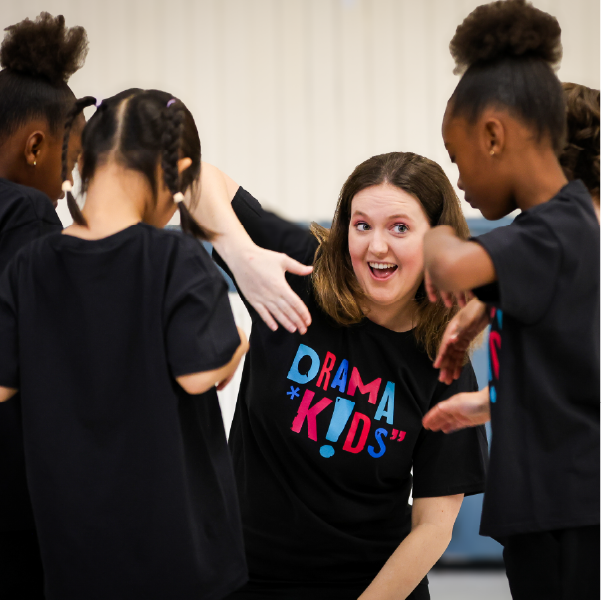
Each class provides a supportive environment where we use storytelling games and drama to explore voice, movement, and character, so everyone can collaborate, learn together, and join in.

Confidence in Action
Parents notice their children speaking up more clearly, joining in scenes and group activities with peers, and proudly sharing their ideas in front of others.
Lower Primary Learning Journey (Ages 4–8)
How Learning Builds Across the Year
Lower Primary is designed to build skills term by term, with consistent class routines and new creative challenges as children grow. Each term adds a new focus, starting with early speaking and storytelling, moving into character and short scenes, and ending with rehearsal and a short share of work. Below is a snapshot of what children practise in Autumn, Spring and Summer.

INSIDE AUTUMN TERM

INSIDE AUTUMN TERM
In Autumn, children begin building vocal clarity and early storytelling skills through playful drama, movement and group games.
Developing core skills:
Children practise vocal clarity and expressive speech while learning to share ideas and work in groups, building confidence through creativity and play.
In the classroom:
Classes include improvisation games and group storytelling, plus speech exercises (articulation and projection). Children use movement to explore character and presence, and try freeze frames and simple scene work, often through themed story worlds.
Confidence in action:
Children practise speaking in front of peers, contributing ideas during drama games, and performing in small groups. The term often ends with a short class showcase or demo so families can see progress.

End of term:
Many children speak with more clarity, join in more readily, and share ideas more boldly.
INSIDE SPRING TERM

INSIDE SPRING TERM
In Spring, children build characters, work together in groups, and start shaping ideas into short scenes and creative responses.
Developing core skills:
Structured storytelling and active listening, with growing collaboration and peer support. Emotional awareness and character skills develop as children make choices and respond to others.
In the classroom:
Mini-scripts and deeper improvisation, using voice and movement to explore character. Simple debates and creative problem-solving, alongside group exercises that build ensemble support.
Confidence in action:
Small-group scenes, leading moments in games or stories, and trying new characters with more independence. Often ends with an informal sharing or creative presentation for families.
End of term:
Children start to own their voice, speaking with purpose, expressing ideas thoughtfully, and taking creative initiative in class.
INSIDE SUMMER TERM

INSIDE SUMMER TERM
In Summer, children bring skills together as they rehearse and share a short production, building clarity, stage presence and pride in their progress.
Developing core skills:
Children memorise lines and follow direction, building focus and reliability in rehearsals. They learn stage presence and audience connection, and strengthen teamwork as they work towards a shared story.
In the classroom:
Over several weeks, the class rehearses a short performance with character development and role ownership. Children may learn songs, simple choreography and blocking, plus team-based stagecraft games that support rehearsal skills.
Confidence in action:
Children take part in a final class showcase or performance, speaking lines with growing clarity and pride. They work together to tell a complete story and support one another as an ensemble.
End of term:
Many children perform with more confidence, carry themselves with greater presence, and enjoy being seen and heard.
What Parents Say
Parent – St. Helens
“My daughter attends Drama Kids in St. Helens. Since joining, her confidence has grown and she looks forward to her lesson each week. Her lovely teacher, Andrea, has nothing but praise for her and is leading her into becoming a talented drama student.”
Find Your Nearest Studio